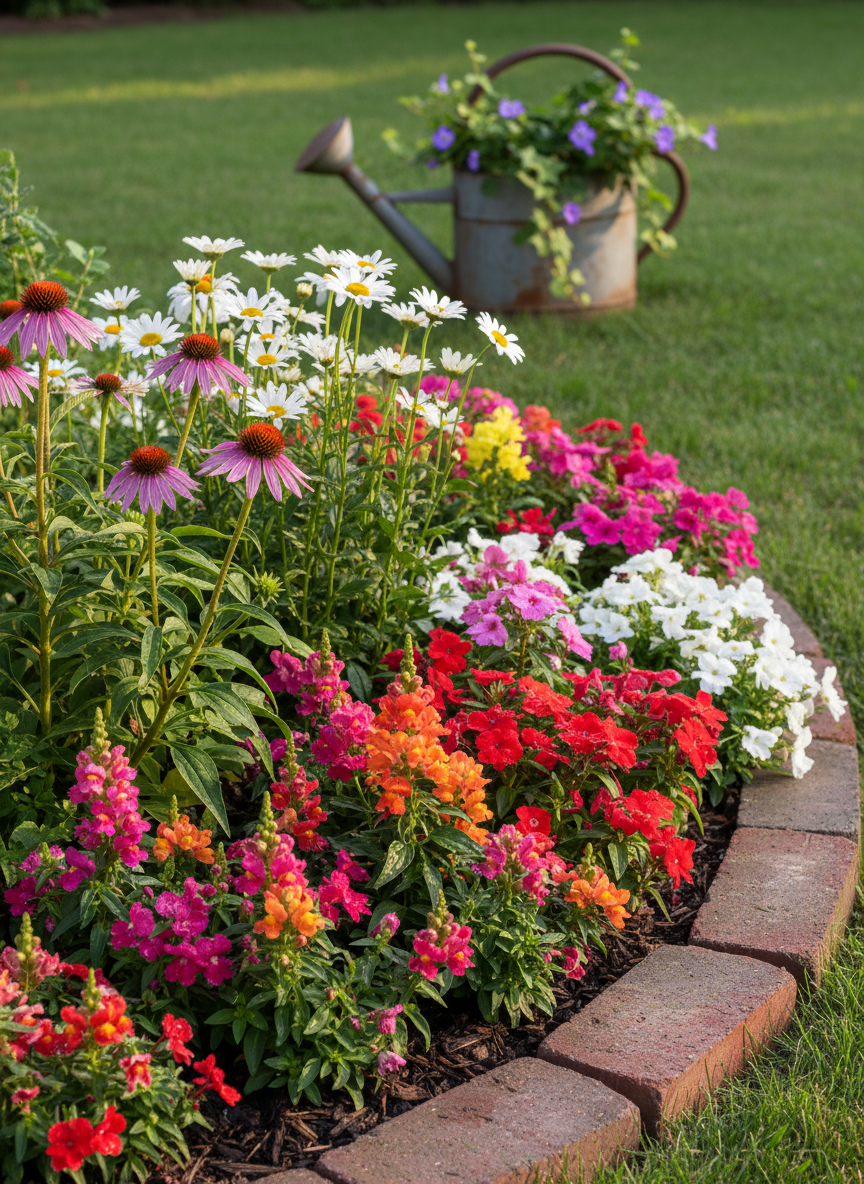
A vibrant close-up of a mixed border showcasing the contrast between long-lived perennials and colorful annuals, with sturdy purple coneflowers and shasta daisies rising behind a frothy edge of dwarf snapdragons and vivid impatiens. Dewdrops cling to the petals and leaves, catching the early morning light. The plants are nestled in rich mulch alongside a curved brick edging that guides the eye through the composition. In the distance, a softly blurred lawn ornament—an old metal watering can planted with trailing ivy—adds a playful touch. Cool, clear morning sunlight illuminates the scene from the side, carving out texture in the petals and casting delicate shadows. Shot at flower height with a medium depth of field, multiple layers of blooms are in focus, conveying depth and abundance. The atmosphere is fresh, energetic, and full of possibility, rendered in crisp, colorful photographic realism.

Garden Zones

Discover how Howell’s USDA zone shapes which perennials return and which annuals love our summers.

Zones

USDA hardiness zones are like a climate map for gardeners, showing how cold your winters get. Choosing plants labeled for your zone helps perennials survive and annuals thrive all summer in Patty’s playful Michigan beds.
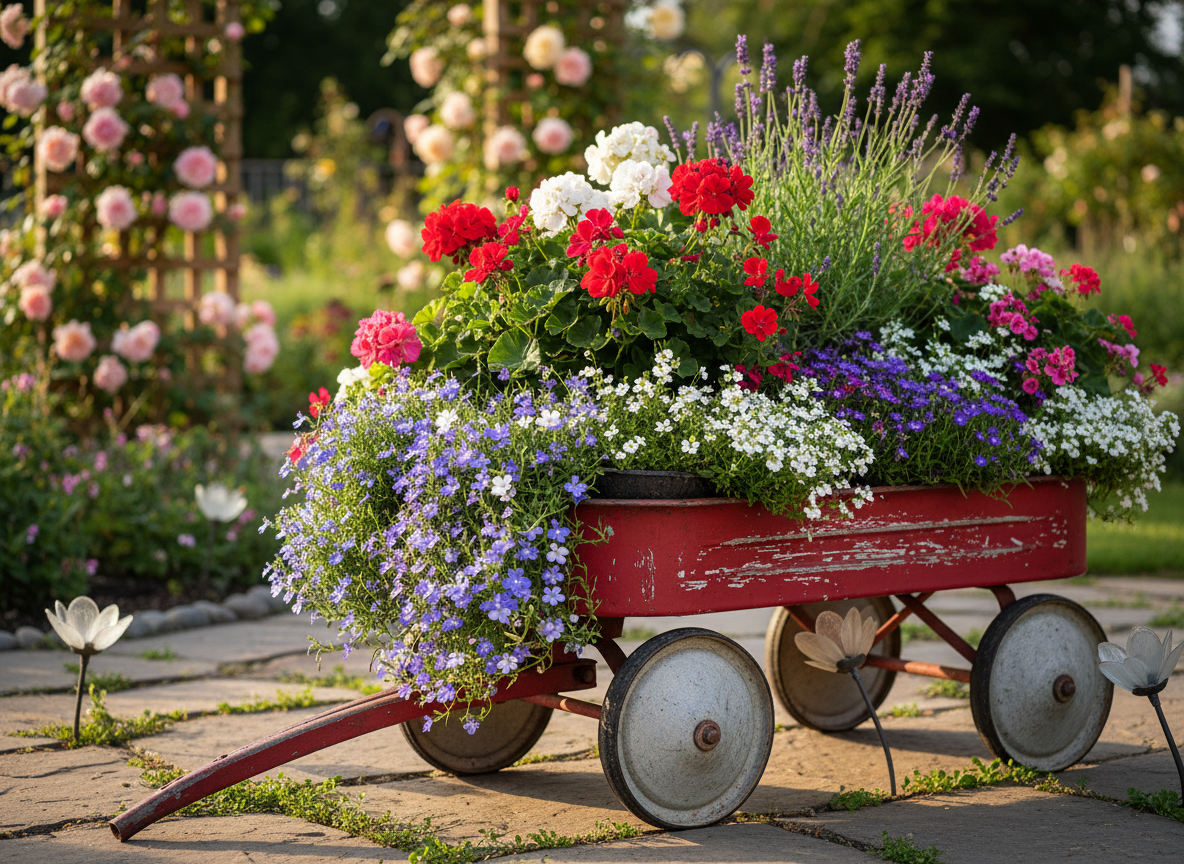
A whimsical vintage red garden wagon overflowing with an eclectic mix of flowering annuals and perennials, including trailing lobelia spilling over the sides, bright geraniums, tiny alyssum, and upright lavender spikes. The wagon rests on a flagstone path bordered by tufts of creeping thyme and small decorative solar lights shaped like flowers. Behind it, a slightly blurred backdrop of a cottage-style garden with climbing roses on a trellis adds depth. Soft golden hour sunlight warms the red paint of the wagon and makes the flower colors pop, casting long, playful shadows across the path. Shot from a low, three-quarter angle, the wagon fills most of the frame, with a shallow depth of field isolating it as the main subject. The mood is nostalgic, fun, and delightfully playful, captured in bright, realistic photography with rich textures and saturated color.
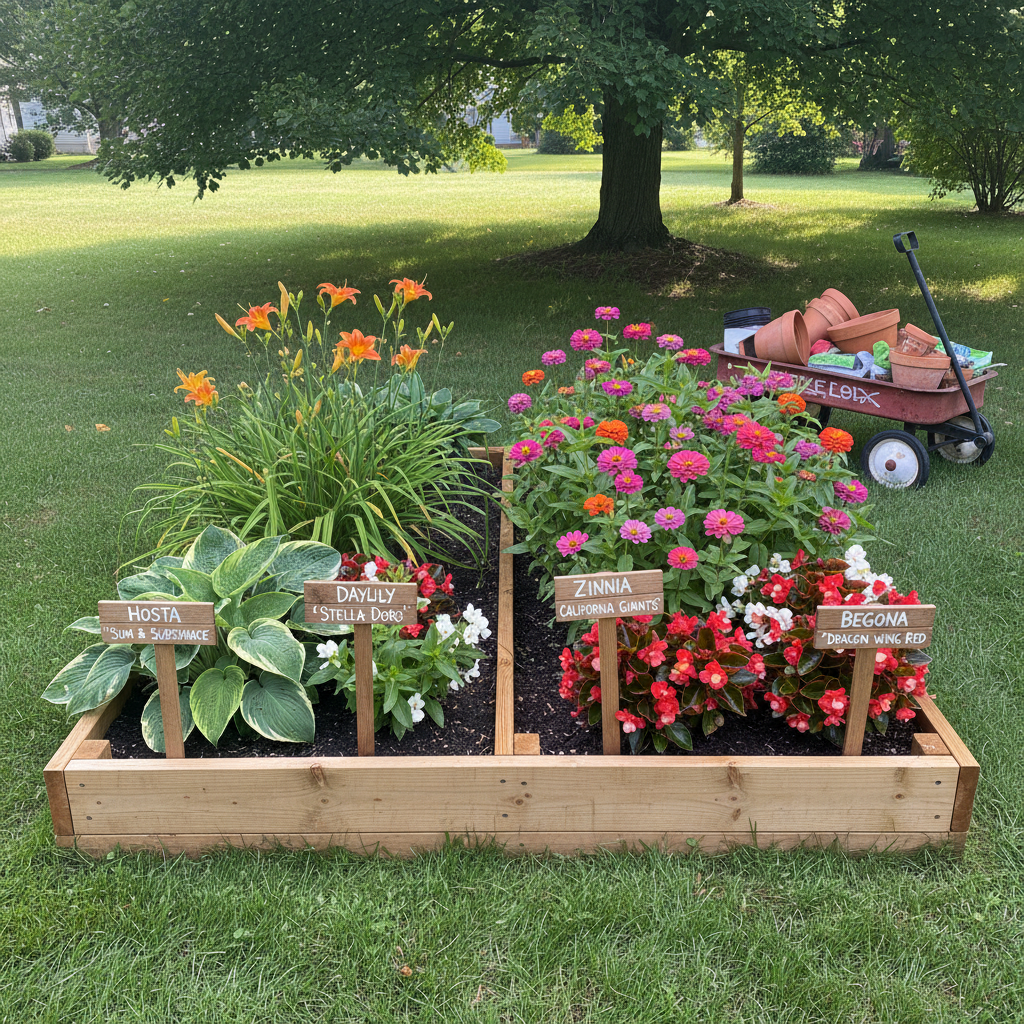
A cheerful raised garden bed divided into neat sections, half planted with sturdy, returning perennials like hostas and daylilies, and half filled with bright, seasonal annuals like zinnias and begonias. Each plant is labeled with charming, hand-painted wooden markers nestled into the dark, freshly watered soil. The bed sits in the center of a small suburban yard, surrounded by a simple grass lawn and a weathered red wagon parked nearby overflowing with flower pots. Soft morning sunlight filters through the leaves of a nearby maple tree, creating dappled patches of light and shadow across the plants. Captured from a slightly elevated angle to clearly show the layout, the composition uses the rule of thirds to balance perennials and annuals. The atmosphere is playful, educational, and inviting, rendered in vivid photographic realism with natural colors and crisp detail.

Browse colorful USDA zone maps paired with photos of hardy coneflowers, cheerful marigolds, and other Patty-approved blooms, so you can quickly match your own garden’s zone to real-life flower inspiration.
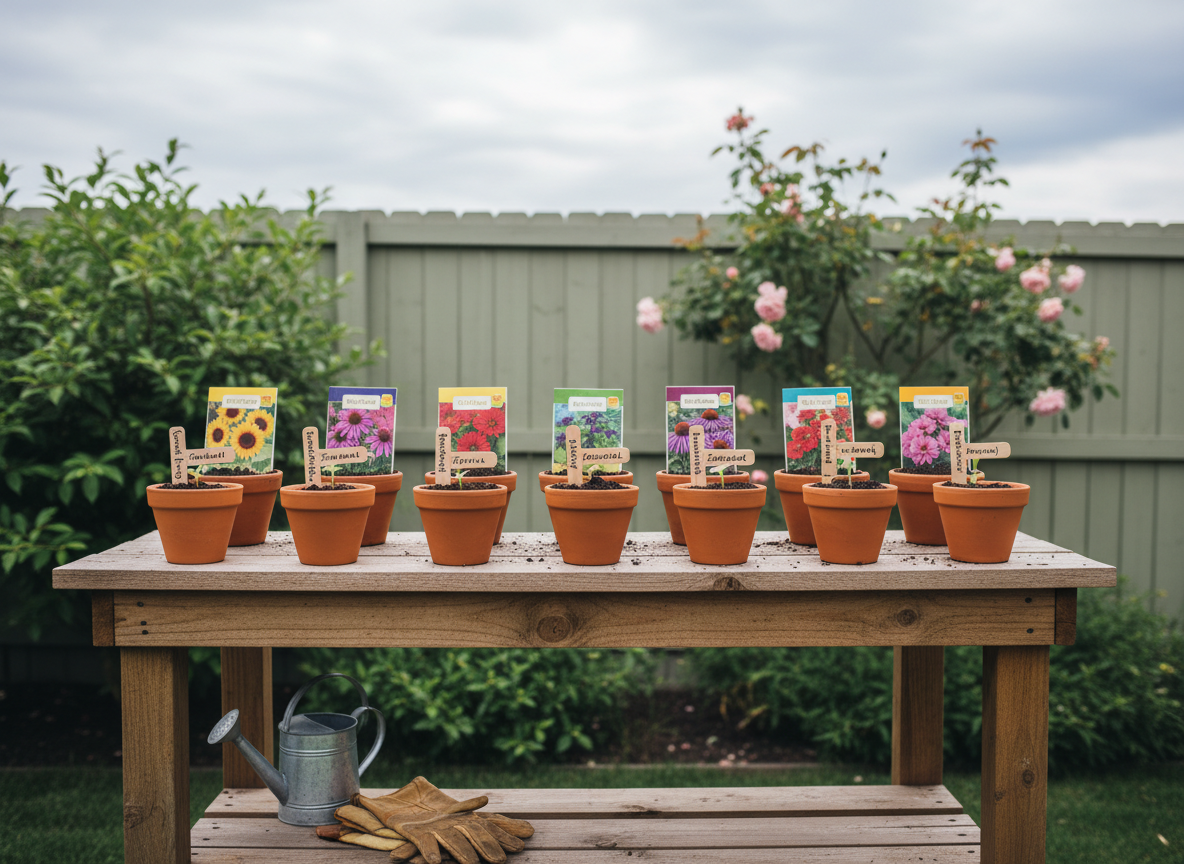
A tidy, educational garden planning scene featuring a large wooden potting bench topped with small terracotta pots, each planted with different labeled seeds and seedlings for both annuals and perennials. Tiny green sprouts push through the soil in some pots, while others show seed packets propped neatly behind them, displaying colorful flower illustrations. The bench sits against a backdrop of a soft-focus backyard fence lined with leafy shrubs. Gentle, diffused overcast light from an open sky above creates even illumination with minimal shadows, emphasizing detail in the soil, labels, and emerging leaves. Photographed from a slightly elevated, front-facing angle, the composition is orderly yet playful, with a shallow depth of field that keeps the focus on the central row of pots. The mood is curious, hopeful, and gently instructive, in clean photographic realism that feels approachable for beginner gardeners.

See how gardens change from chilly northern zones to milder southern ones, with side‑by‑side images of borders, containers, and pollinator patches that prove every climate can host a wagon-full of color and texture.

Lessons